Optics
UST Projector Screen Gain Explained: Why 0.6 Is Not “Worse” Than 1.0
Gain describes reflected brightness behavior, but it only makes sense alongside projector brightness, screen size, viewing angle and ambient-light rejection.
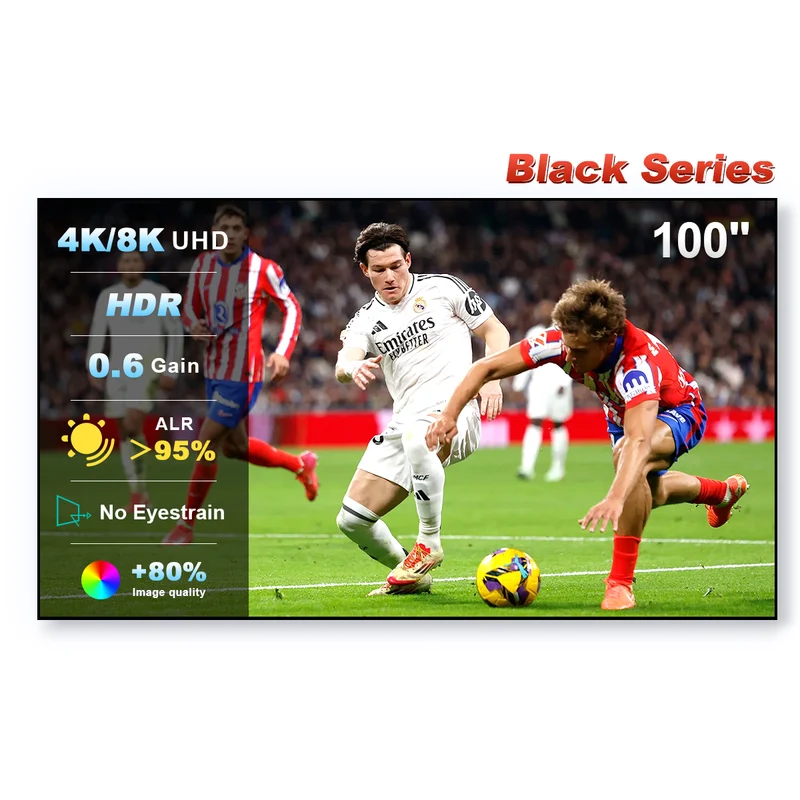
Think of gain as a trade-off, not a score
A 1.0 reference surface is often treated as a baseline. A 0.6-gain screen returns less measured light toward a given observation geometry than that reference. That can sound negative until you remember that a UST ALR screen is also trying to suppress unwanted light and lower the visible black floor.
Lower gain can help perceived contrast
In a room with ambient light, a darker screen surface can look darker when no image is being projected. If the UST projector is bright enough, the screen can still produce strong whites while keeping blacks from lifting as much as they would on a bright white surface.
But screen size taxes brightness
Going from 100 to 120 inches increases image area substantially. The same projector lumens are spread across more surface, so a 0.6-gain 120-inch setup has less brightness headroom than the same projector on a 100-inch screen.
A practical gain decision
- Bright projector + ambient light: lower-gain UST ALR can make sense.
- Dim projector + very large image: be cautious about sacrificing brightness.
- Dark theater: you may value a different screen balance entirely.
Check Black Series specifications →
FAQ
Is higher screen gain always better?
No. Higher gain can increase on-axis brightness but may narrow viewing behavior or reduce some ambient-light/black-level advantages depending on the material.
What does 0.6 gain mean?
A gain value is a relative measure of screen reflectivity compared with a reference surface under a defined measurement method. The exact real-world result depends on measurement method and viewing geometry.
Why does the Black Series use 0.6 gain?
The manufacturer positions its low-gain surface around darker blacks, contrast and UST ambient-light control rather than maximum reflected brightness.
Keep researching
Research basis: NothingProjector product and educational pages, checked 2026-09-15; general gain explanation is editorial.