One-degree-away room optimization
Ambient Light for UST Projector Rooms: Fix the Room Before Chasing Lumens
The best bright-room UST setup combines projector brightness, directional screen material and sensible control of the light that hits the screen.
Not all ambient light is equally damaging
Light that strikes the screen and reflects toward the viewer raises the visible black floor. Direct sun is especially severe. Ceiling light is important for UST screens because many lenticular structures are explicitly designed to absorb more light arriving from above.
Three cheap room changes can matter
- Use shades or blinds on windows that cast light toward the screen.
- Dim or reposition ceiling fixtures closest to the screen.
- Reduce highly reflective surfaces immediately around the image when possible.
Then choose the screen structure
If seats are spread wide, lenticular UST ALR/CLR material may be attractive. If viewers sit close to center and the room has light from multiple directions, a Fresnel screen can be worth comparing.
Where the Black Series fits
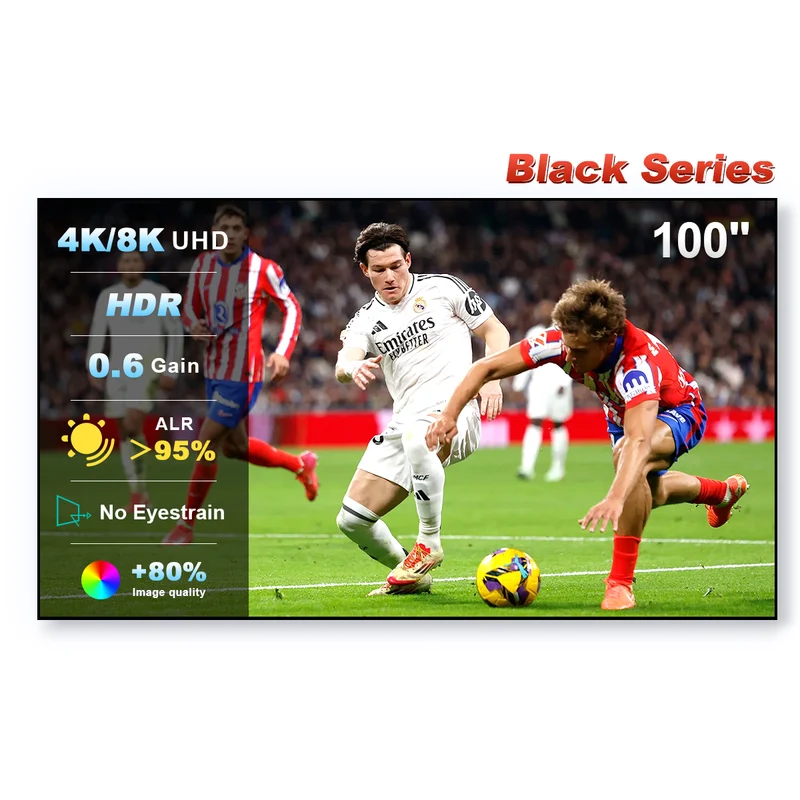
The manufacturer rates the Black Series at 95% ambient-light rejection with a 170° viewing angle. Treat those as product claims, not a promise that your room no longer needs lighting discipline.
Check the Black Series for bright-room use →
FAQ
What ambient light is hardest for a UST screen?
Direct sunlight on the screen is especially difficult. UST ALR/CLR screens are designed to manage ambient light, not defeat the sun.
Do ceiling lights matter?
Yes. Ceiling light is a major reason lenticular CLR-style UST screens exist; their structure is designed to reduce light arriving from above.
Should I still use shades with an ALR screen?
Usually yes when practical. Reducing unnecessary light improves contrast regardless of screen technology.
Keep researching
Research basis: Black Series manufacturer specifications; current UST/CLR educational material on ambient-light direction; editorial room-optimization guidance.